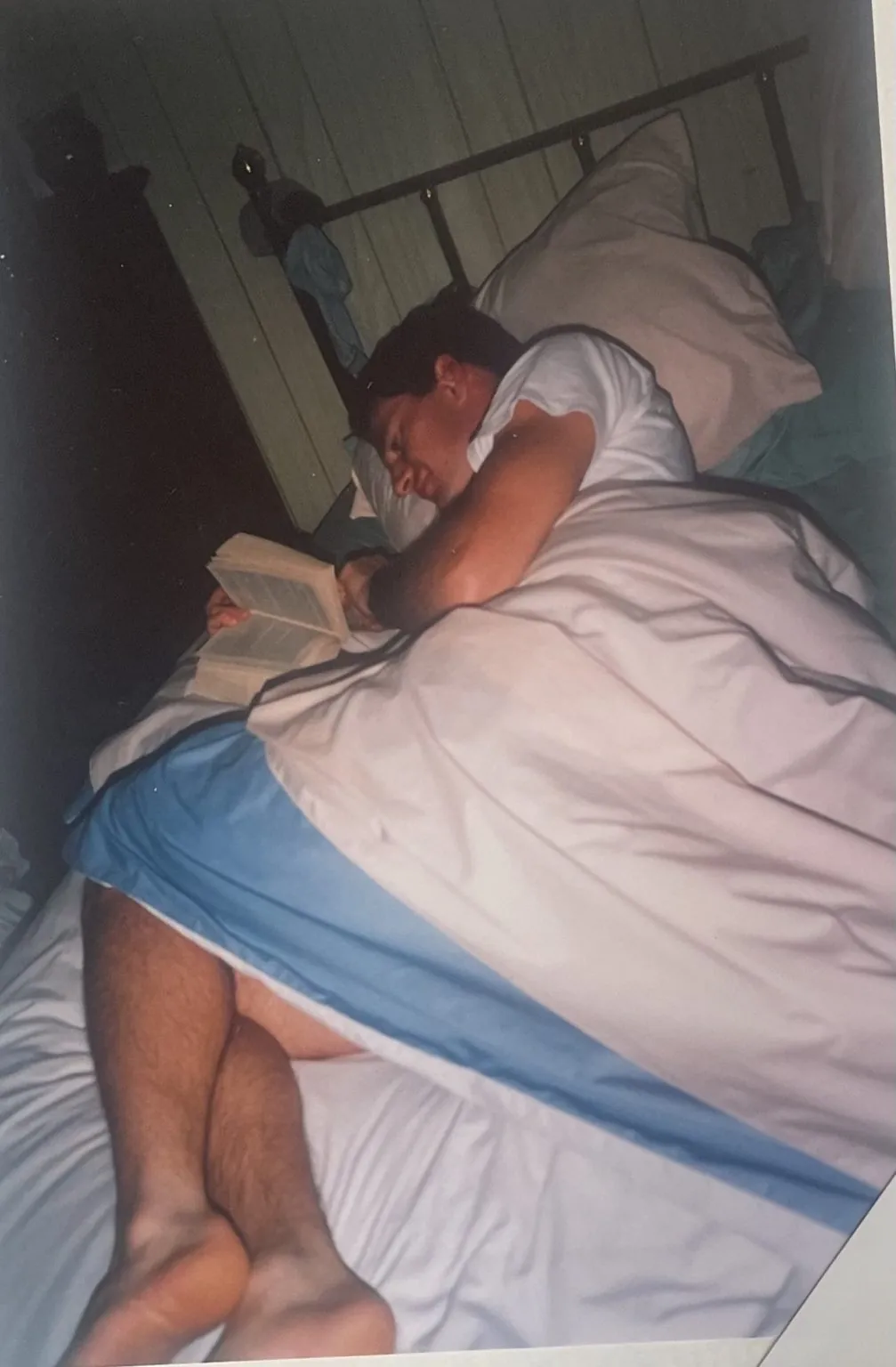
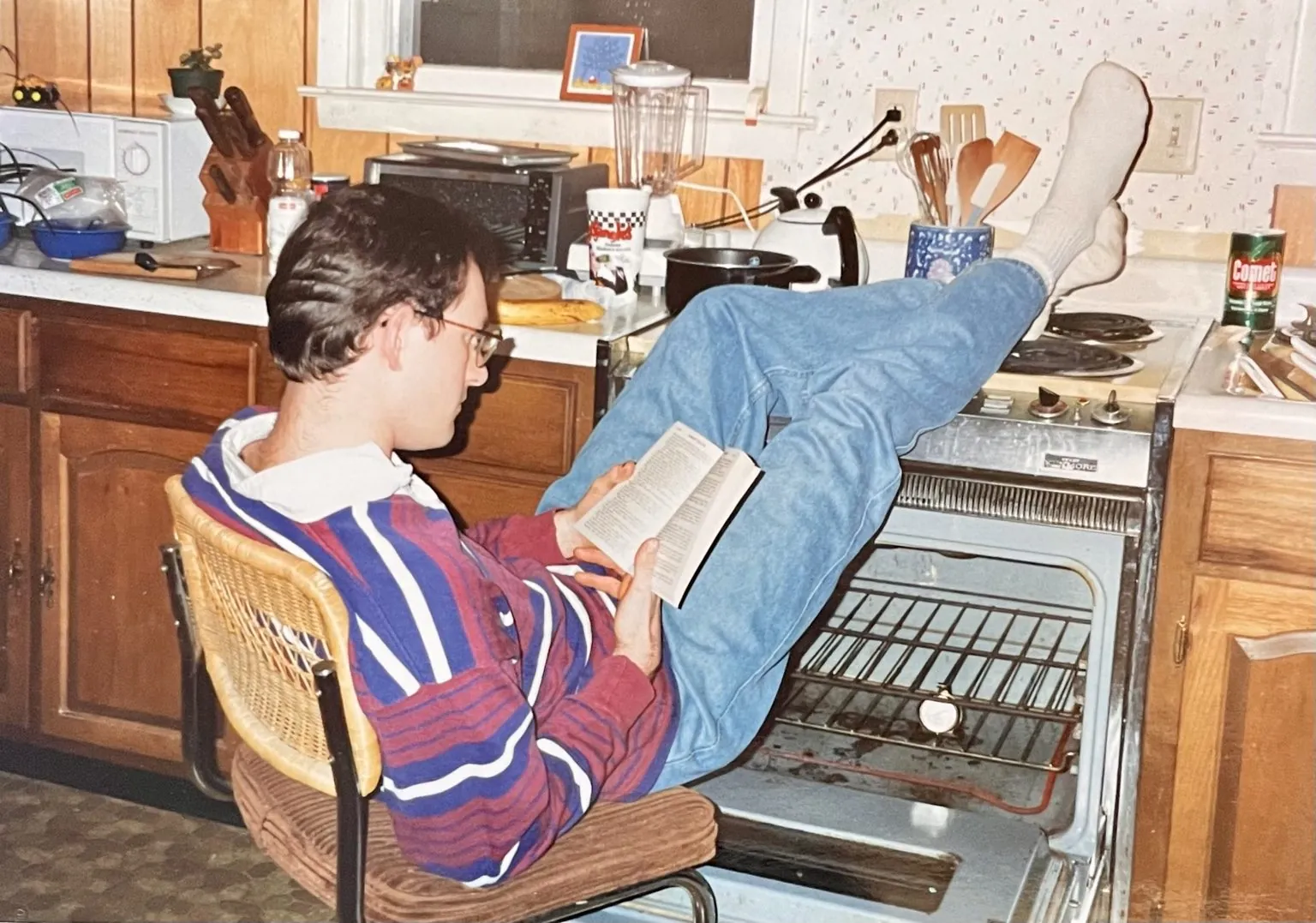
"Herald of himself, his own advance guard
Planting flags in puddles, claiming it's hard"
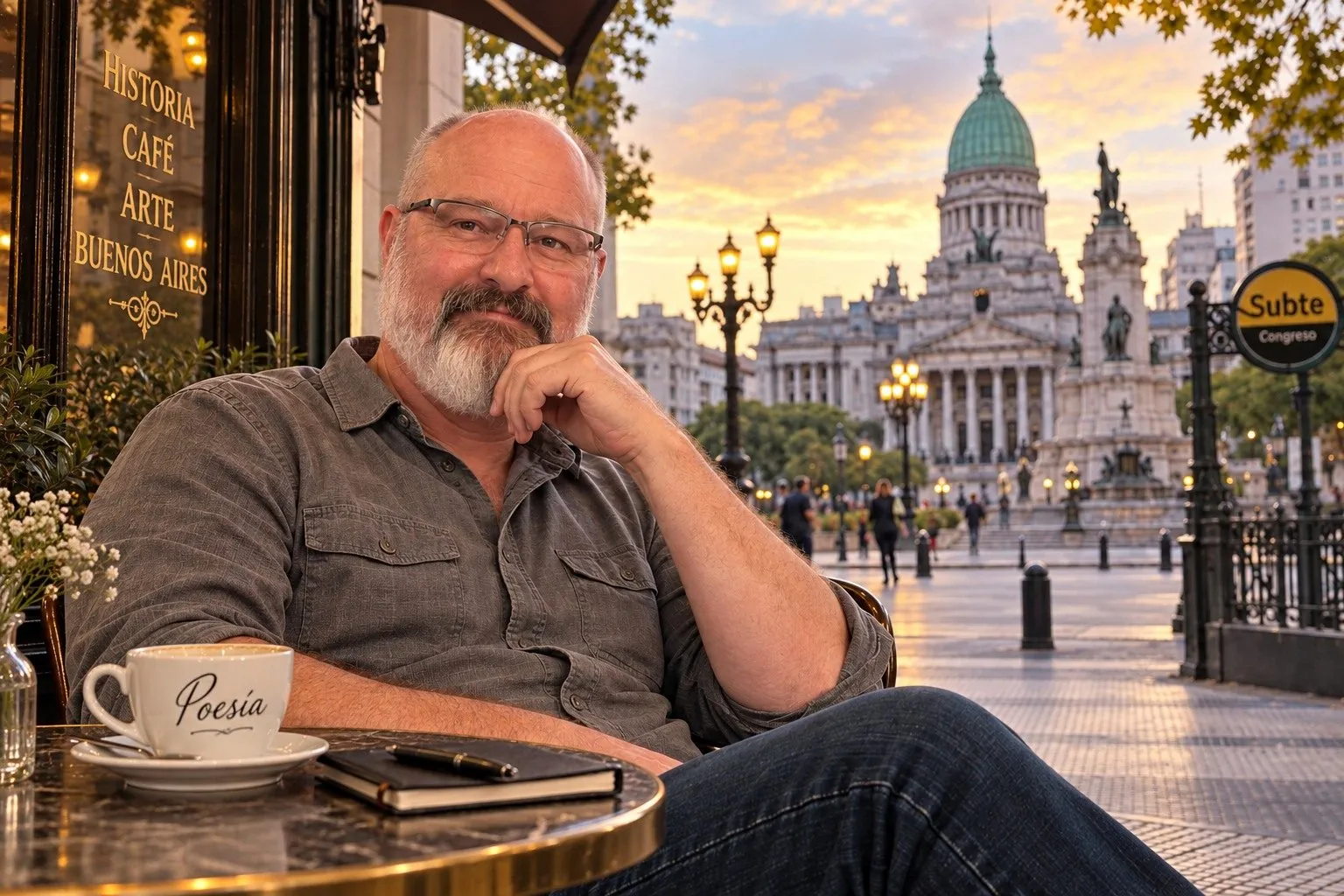
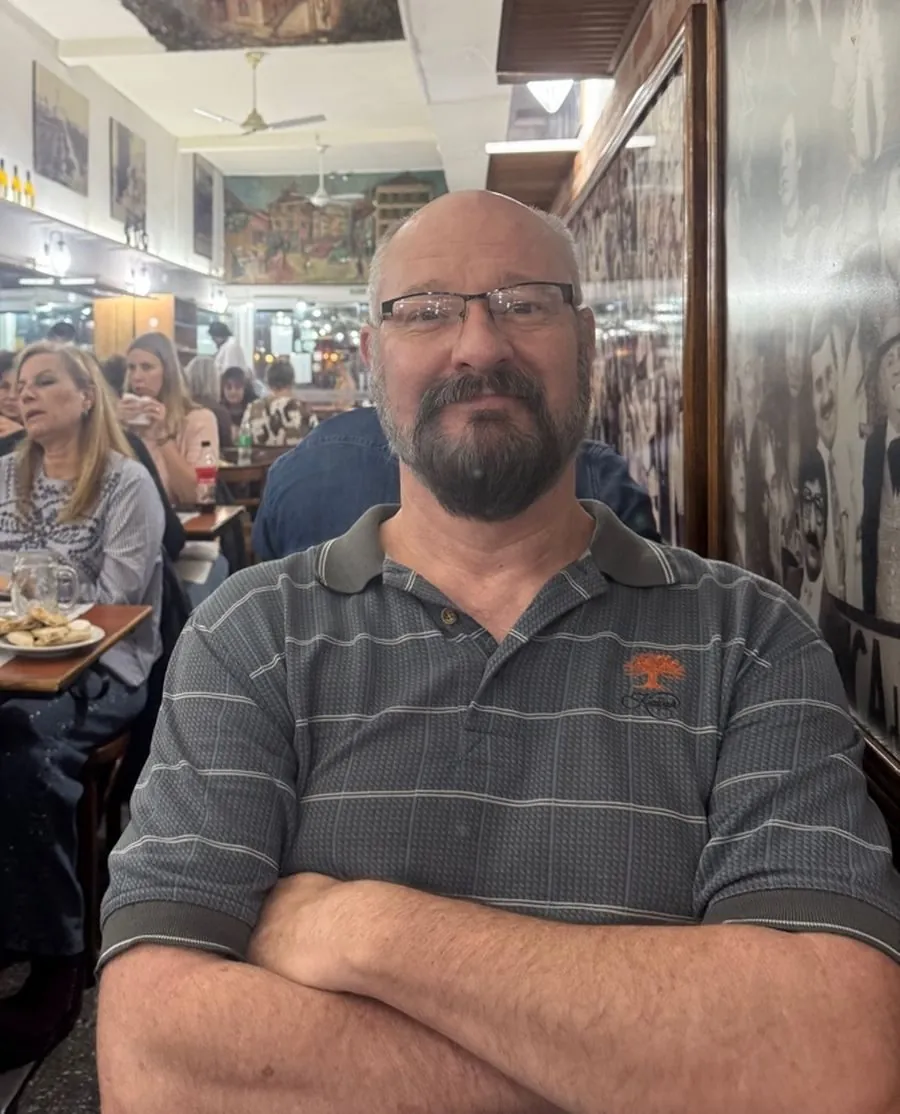
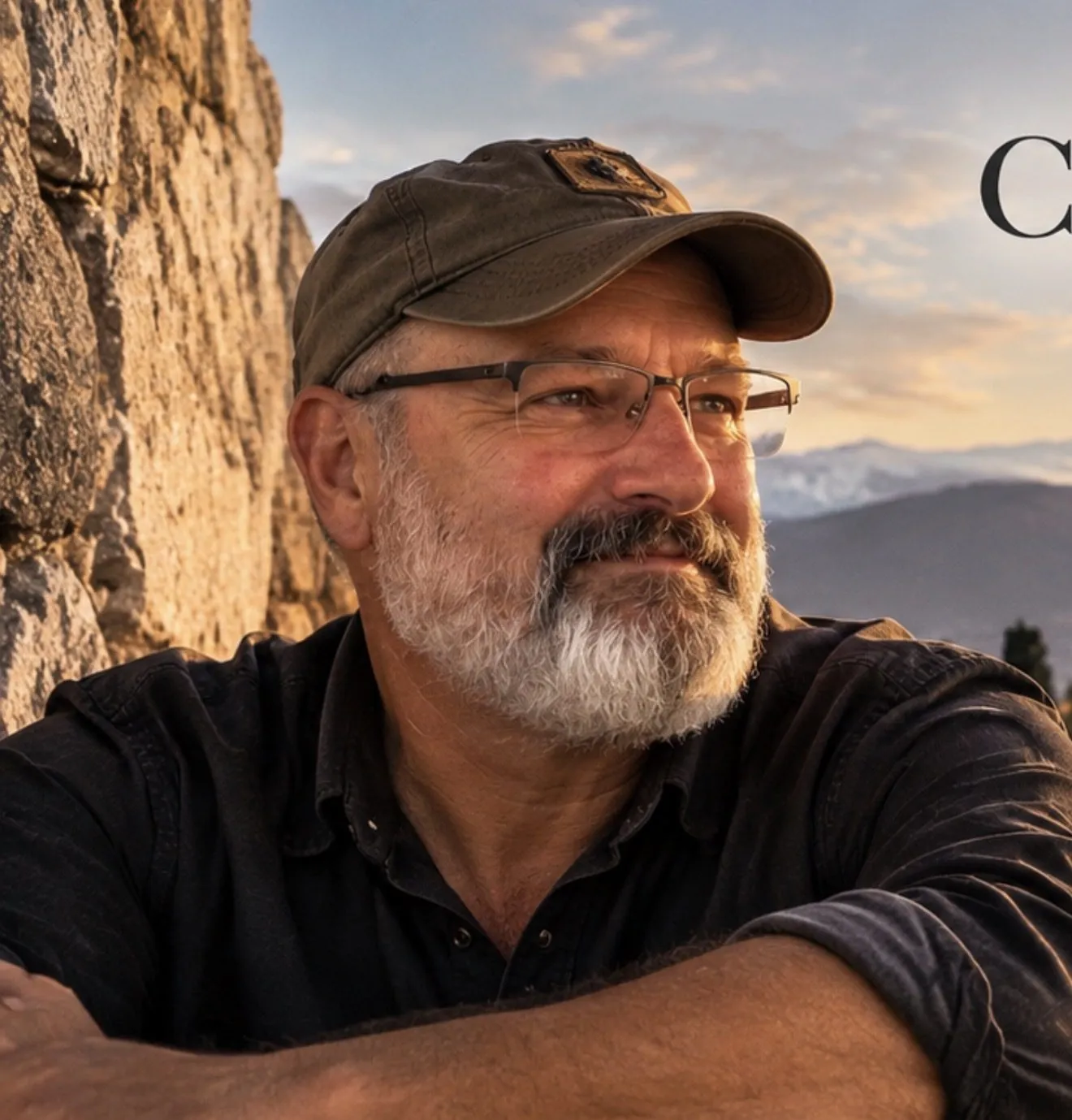
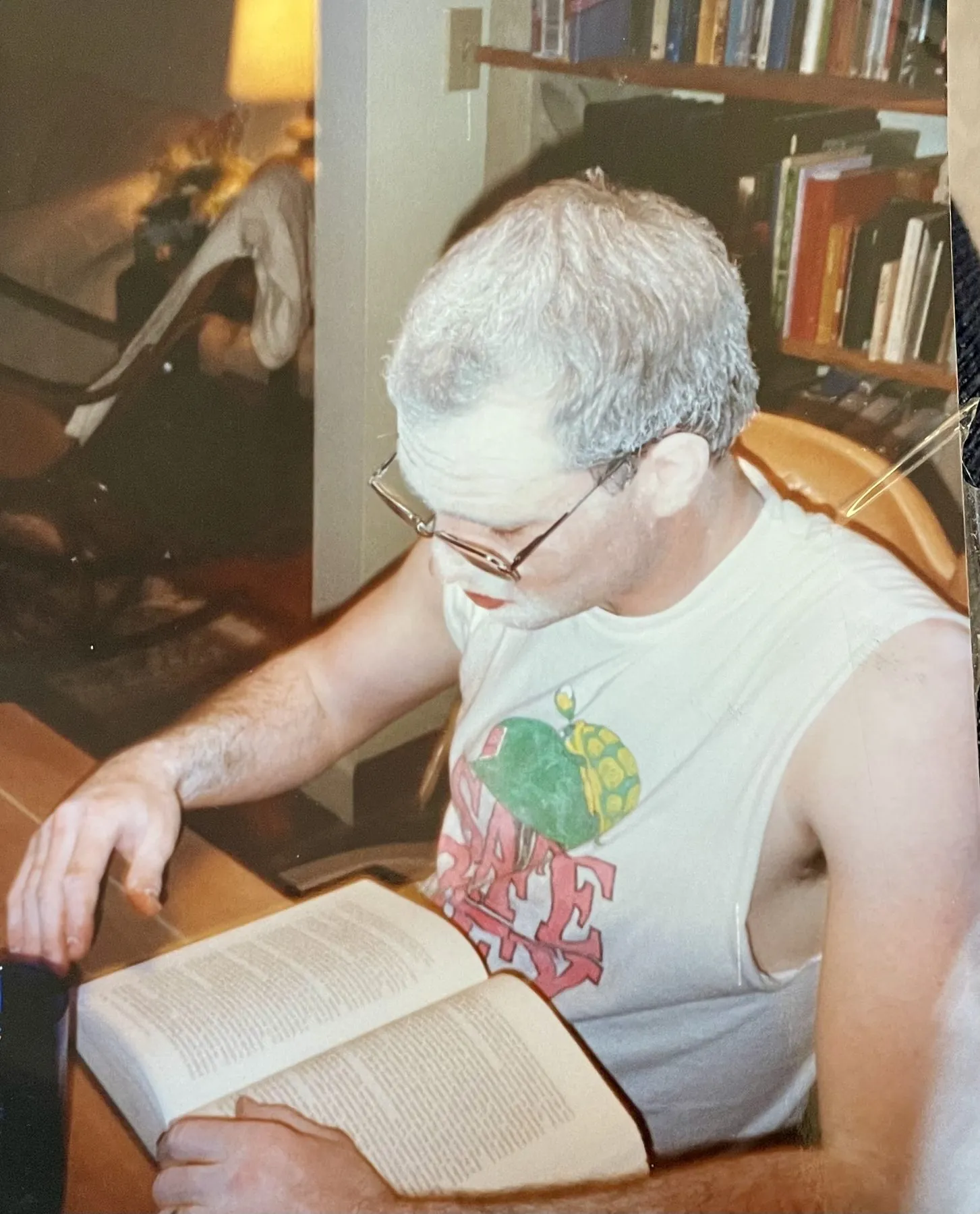
Christopher N. Mileham is an American poet, lyricist, independent recording artist, entrepreneur, traveler, and occasional menace to conventional literary restraint.
Writing and recording as C. N. Mileham, under the cheerfully self-appointed title Adelantado de la Poesía, he creates work that wanders between languages, musical traditions, philosophical inquiry, irreverent humor, and the frequently bewildering business of being human.
His poetry and music explore love, memory, faith, mortality, regret, desire, and the peculiar tendency of human beings to make simple things extraordinarily complicated.
He is an ASCAP-affiliated songwriter and lyricist, with his publishing interests represented through Adelantado Music.
His first album, El Cuerpo, was released in August 2026.
His second, Incendio Voraz, is scheduled for Thanksgiving Day, November 26, 2026.
The date is not accidental.
But that story begins much earlier.
An Education in Everywhere
Born in Urbana, Illinois, in 1967 and raised in Charlotte, North Carolina, Mileham grew up in a household where music, books, work, and curiosity were everyday companions.
His parents' musical tastes were broad, and his own quickly became broader.
An early attempt at piano lessons lasted approximately two years. The piano survived. His ambitions as a performing pianist did not.
Music, however, remained.
In 1981, at fourteen, he traveled to India to attend New Era High School in Panchgani, Maharashtra.
The experience fundamentally expanded his cultural and musical horizons.
Indian classical traditions, popular music, devotional singing, and the extraordinary rhythmic diversity of the subcontinent entered a musical vocabulary already populated by American rock, folk, soul, and Motown.
His years in India also deepened his engagement with the Bahá'í Faith, an influence that continues to inform his reflections on humanity, spirituality, and the relationships between people and cultures.
Returning to the United States in 1983 did little to diminish his appetite for unfamiliar places.
Over the following decades, Mileham traveled extensively, developing an enduring fascination with the ways different cultures express themselves through music, language, food, architecture, and storytelling.
He is a voracious reader across dozens of genres, moving comfortably—and occasionally uncomfortably—between history, philosophy, science fiction, fantasy, theology, biography, poetry, and whatever else happens to catch his attention.
Literary influences include the wit and social observation of Mark Twain, the linguistic exuberance of Shakespeare, the haunting musicality of Edgar Allan Poe, and the intellectual audacity of Sor Juana Inés de la Cruz. Read about Sor Juana →
He is equally interested in writers who challenge conventional thinking, expose hypocrisy, or demonstrate that profound truths can occasionally be delivered through ridiculous circumstances.
Particularly ridiculous circumstances.
Music Before the Music
During the 1980s, Mileham worked with independent songwriter Wilford Johnson and Wayback Music, assisting with recording sessions, production logistics, live performances, and music distribution.
It was an early education in the considerable labor involved in creating music and the somewhat less predictable business of persuading people to buy it.
Johnson's recordings blended country and world-music influences, and the experience gave Mileham a firsthand appreciation for independent musicianship long before he began releasing his own work.
Music remained woven through his personal life.
His first wife was a singer-songwriter, and his family continued to cultivate musical interests across generations.
His son Liam Hollahan, a saxophonist and performing arts graduate of the University of North Carolina at Greensboro, represents another connection to that continuing musical tradition.
The saxophone features prominently in Mileham's recordings, an instrument whose expressive possibilities he finds particularly appealing.
His musical influences are almost aggressively eclectic.
Motown, funk, and classic soul provide much of the rhythmic foundation for his compositions. American folk and singer-songwriters contribute an affection for narrative, intimacy, and emotional directness.
Blues, jazz, rock, progressive music, and musical traditions from India, Latin America, Europe, and the Middle East all make appearances.
He has a particular affection for the twelve-string acoustic guitar and the tabla, instruments whose interplay of melody, resonance, and rhythm reflects his fascination with musical traditions meeting across cultures.
Indian musical influences remain particularly important, especially in the world-beat character of El Cuerpo.
His travels have continued to introduce him to new musical traditions, from Latin America to Europe, the Middle East, and Asia.
Genre boundaries, in Mileham's view, are useful primarily as suggestions.
Other Lives
In 1986, Mileham joined the United States Navy, serving as a hospital corpsman with the Marines and Seabees.
His deployments included Puerto Rico, Okinawa, Saudi Arabia, and Kuwait, including service during Operations Desert Shield and Desert Storm.
Over the following decades, he co-founded technology businesses, pursued residential remodeling projects, and became a co-owner of a retail franchise.
He earned a bachelor's degree in History from the University of North Carolina at Charlotte, with minors in political science, education, and psychology.
He also married, raised children, experienced divorce, remarried, and continued traveling.
His life increasingly stretched across continents, with enduring connections to the United States, India, Spain, Argentina, and Chile.
These experiences would eventually become the raw material for his writing.
For most of his adult life, however, they remained largely unrecorded.
At least in verse.
The Unexpected Arrival of Poetry
By late 2025, Mileham was confronting physical limitations, cognitive and psychological difficulties stemming from his Gulf War service.
Reduced mobility was changing the ways he could engage with activities that had long been central to his life.
Then, during Thanksgiving 2025, his sister Joy read some of his writing.
She encouraged him to write more.
He did.
Rather more than anyone anticipated.
What followed was an extraordinarily prolific period of poetry and lyric writing.
Words arrived in bursts—sometimes playful, sometimes painful, frequently alliterative, and occasionally in several languages simultaneously.
One early poem, Late Onset, describes the experience:
Irresistible unstoppable
hemorrhage
aortic geyser of consonants and vowels
Splashed across the page
The imagery is characteristically excessive.
It is also a reasonably accurate description of the process.
Mileham's writing frequently begins without a fully developed plan. Language, rhythm, association, and imagery emerge rapidly, with conscious editing and refinement following afterward.
The results range from meditations on mortality and moral responsibility to affectionate portraits of family life, philosophical arguments, and spectacularly undignified examinations of everyday absurdity.
He is particularly fond of ambiguity, unexpected changes of linguistic register, and the collision of serious subjects with ridiculous observations.
The solemn is seldom permitted to remain solemn indefinitely.
From Page to Recording
Having spent a lifetime loving music, Mileham eventually began exploring how his newly prolific writing might be adapted into songs.
He discovered that modern music-production technology offered a way to develop recordings without requiring him to become the instrumental performer he had never quite managed to be.
His process begins with original poetry or lyrics.
From there, he develops musical concepts, experiments with arrangements, and repeatedly revises both words and production choices.
His recordings currently incorporate LLM-assisted music generation through Suno, with Mileham directing the creative process through detailed experimentation involving genre, instrumentation, tempo, vocal character, and arrangement.
He is also beginning collaborations with human musicians and performers, with the intention of developing fully human-performed recordings alongside his existing catalog.
The technology is a means of realizing the work.
The words—and the experiences, observations, and occasionally questionable judgments behind them—remain his own.
His debut album, El Cuerpo, released August 8, 2026, draws on autobiographical experience, philosophical inquiry, linguistic experimentation, and the musical traditions that have shaped his life.
Subsequent singles have explored subjects ranging from memory and emotional intimacy to cognitive experience, cultural contradiction, and the behavior of domestic cats.
The latter are not always presented as the lesser philosophical problem.
The Adelantado
The title Adelantado de la Poesía is both an artistic identity and an elaborate joke at its creator's expense.
Historically, an adelantado was someone authorized to advance into unfamiliar territory, often claiming land and authority on behalf of a crown.
Mileham has appointed himself to a similar office.
No crown was consulted.
No territory has been acquired.
His authority remains entirely self-proclaimed.
His principal activities involve exploring language, planting metaphorical flags, and occasionally discovering that the territory has already been occupied by writers considerably more accomplished than himself.
The persona is deliberately grandiose, self-mocking, and occasionally insufferable.
It is also sincere.
Beneath the linguistic games and theatrical declarations lies a genuine fascination with human experience: how people love, suffer, misunderstand one another, reconcile, remember, and attempt to make sense of their brief existence.
His work is not particularly concerned with maintaining the boundaries between poetry and songwriting, comedy and tragedy, spirituality and skepticism, or English and Spanish.
Life, after all, rarely respects such distinctions.
The Journey Continues
Mileham continues to write poetry, develop recordings, and pursue a growing catalog of musical projects.
His forthcoming album Incendio Voraz will be released on November 26, 2026—one year after his sister encouraged him to write more.
What began as an unexpected creative experiment has become an expanding body of work concerned with the experiences that connect people across cultures, generations, and circumstances.
The writing is sometimes tender, sometimes angry, sometimes philosophical, and occasionally gloriously absurd.
It is rarely restrained.
And despite an abiding fascination with uncertainty, mortality, and the mysteries of human consciousness, its author remains stubbornly convinced that life means something.
Knowing that the living is in the journey.